
ERP therapy in Charlotte NC for obsessive-compulsive disorder (OCD).
Exposure and Response Prevention (ERP) Therapy for OCD in Charlotte, NC
I provide Exposure and Response Prevention (ERP) therapy to help you break the OCD cycle and reclaim your life. For those seeking ERP therapy in Charlotte NC, sessions are available in person and via secure telehealth throughout North and South Carolina.
Hi, I'm Anna
I specialize in ERP (Exposure and Response Prevention) therapy for OCD, a leading, evidence-based approach for obsessive-compulsive disorder. I completed intensive training through the Behavioral Therapy Training Institute (BTTI) at the International OCD Foundation, and I'm credentialed through the IOCDF as an OCD specialist.
What I've learned from years of working with OCD is that ERP works best when it's personalized and collaborative. Exposures are never generic or forced. We identify how your OCD operates, build a plan that fits your life, and practice ERP exercises with thoughtful preparation and reflection.
If you're dealing with intrusive thoughts, compulsions, or constant doubt, ERP can help you break the cycle and reclaim a sense of freedom. It's challenging work, and you won't be doing it alone.
What ERP therapy in Charlotte, NC actually looks like
Exposure and Response Prevention (ERP) is a specialized form of Cognitive Behavioral Therapy (CBT) for OCD. Rather than trying to eliminate thoughts or fears, ERP focuses on changing how you respond to them.
In practice, that means gradually facing triggers while learning to resist the compulsions or safety behaviors that keep OCD going. Over time, this weakens the obsession–compulsion cycle and helps you feel more grounded, flexible, and in control.
ERP is one of the most effective treatments for Obsessive-Compulsive Disorder. If you'd like a broader overview of OCD and available support, you can also visit the OCD treatment page.
Because many fear-based conditions involve similar patterns of avoidance and reassurance-seeking, ERP can also be helpful for panic disorder, social anxiety, health anxiety, specific phobias, and related concerns.
ERP therapy has two parts:
- Exposure ("E"): Intentionally facing people, places, images, thoughts, or sensations that provoke obsessions.
- Response Prevention ("RP"): Resisting compulsions and safety behaviors that temporarily reduce anxiety but keep OCD alive.
How I Use ERP Therapy
I follow a structured, evidence-based ERP process that starts with clarity and builds gradually into real-world practice. Here's what that looks like:
1. Education
ERP begins with education about the OCD cycle, how obsessions trigger anxiety, compulsions bring short-term relief, and the loop strengthens over time. You'll learn how ERP interrupts the cycle and we'll review resources that fit your OCD presentation.
2. Awareness
We increase awareness of your obsessions, triggers, fears, and compulsions. This includes subtle patterns like mental compulsions (reviewing, analyzing, reassurance-seeking, rumination, neutralizing). You'll keep brief observations so we can track patterns and choose the best ERP targets.
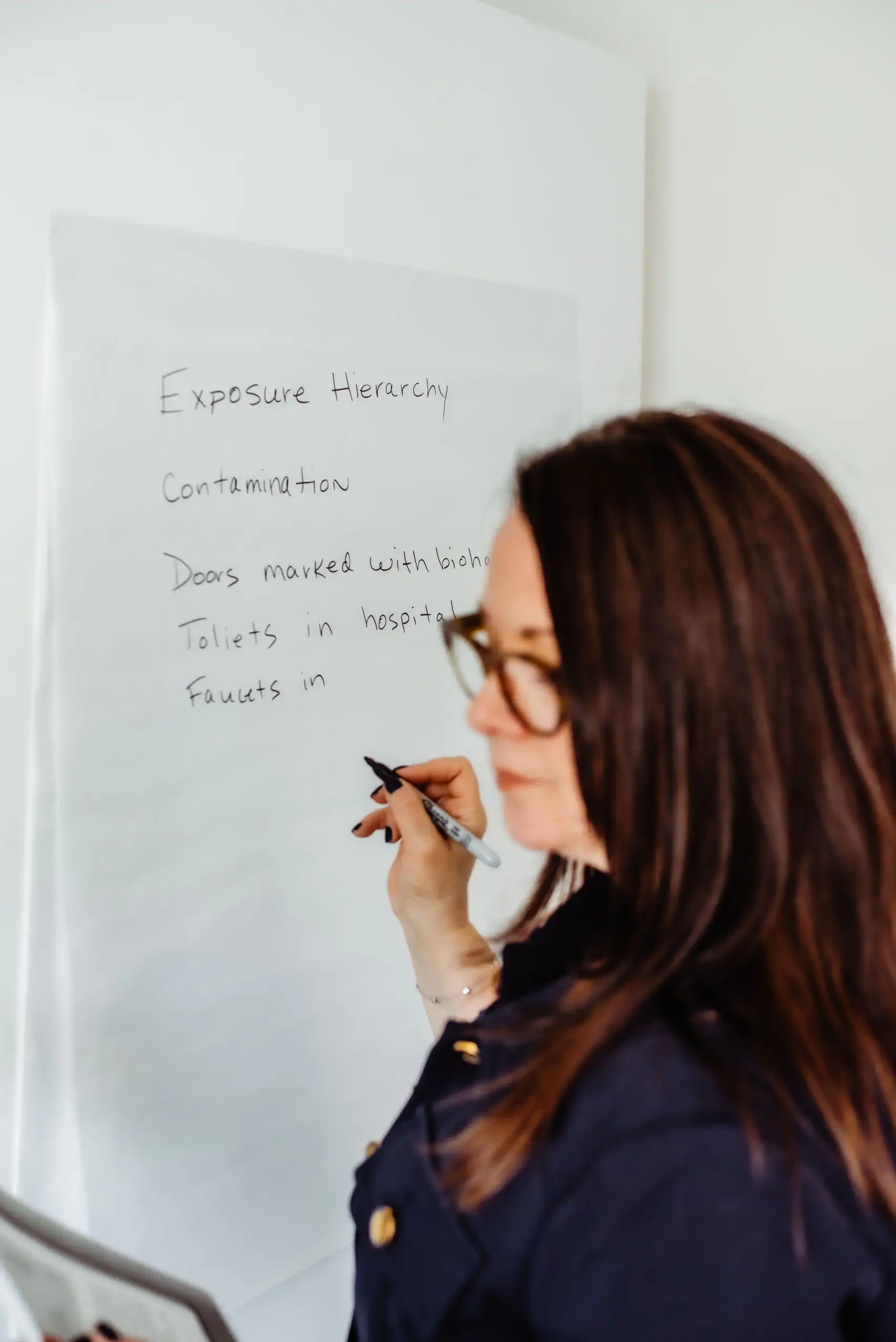
3. Building Your Exposure Hierarchy
Together, we build a personalized exposure hierarchy, a ranked list of avoided or distressing situations from least to most difficult (often rated 0–10 or 0–100). This helps us pace ERP in a way that's challenging but doable.
4. Exposure & Response Prevention
With your hierarchy in place, you'll begin structured exposures at a manageable pace while actively resisting compulsions. We work collaboratively, you're never forced into an exposure that feels overwhelming, and we adjust based on your progress.
Let me give you a specific example of how this can look in practice:
As an example, let's say you're struggling with Moral OCD centered around the fear, "What if I'm a bad person?" OCD pushes you to analyze your intentions, replay conversations, seek reassurance, or avoid situations where you fear you could do something "wrong."
In ERP, we wouldn't try to prove you're a good person. Instead, we design exposures that help you practice tolerating moral uncertainty without doing compulsions. You might practice allowing thoughts like "Maybe I'm not a good person" while resisting mental review, reassurance, or checking.
As that becomes more manageable, we may move into real-life exposures, such as making everyday decisions without reviewing your motives afterward, allowing discomfort after social interactions without replaying them, or practicing being misunderstood without reassurance-seeking.
Over time, exposures may involve intentionally allowing doubt to exist without confession, rumination, or mental checking. You learn you can live your values without having to "solve" the uncertainty first.
Your hierarchy evolves as you complete exercises and add new ones. Because most learning happens between sessions, brief daily practice is essential, with support and coaching along the way.
Will ERP get rid of my OCD obsessions?
ERP doesn't focus on eliminating or debating thoughts, and trying to "prove" thoughts wrong can keep OCD going. We can't fully control what pops into our minds, but we can change how we respond. ERP helps you respond in a way that removes fuel from the OCD cycle.
As compulsions drop, the OCD cycle weakens. Intrusive thoughts may still show up at times, but they carry far less weight and urgency. You'll build the ability to let thoughts pass without getting pulled into rituals.
ERP sounds scary. Why would I trigger myself on purpose?
This is one of the most common concerns I hear, and it makes complete sense. Intentionally facing fears sounds counterintuitive when you've spent so long trying to reduce anxiety.
Here's the difference: unmanaged OCD already triggers you all day, and the relief never lasts. ERP gives you a structured way to face fears on purpose so your brain learns something new and the cycle starts to loosen.
ERP is paced, collaborative, and purposeful. We start with manageable exposures, build skills step by step, and adjust as we learn what helps you most.
Most importantly: you're not alone in this work. I'll help you design exposures, troubleshoot compulsions and safety behaviors, and make the plan feel doable.
How Does ERP Work? Habituation & Inhibitory Learning
Understanding the mechanisms behind ERP can make it feel less mysterious. Two complementary learning models are often discussed:
Habituation Model
With repeated exposure, distress often decreases over time. Think of a scary movie that feels intense at first, then loses its impact after repeated viewings. In this model, anxiety fades as you become less reactive through practice.
Example: A client with Harm OCD who fears losing control while chopping vegetables near their spouse may notice their anxiety drops after repeated practice.
Inhibitory Learning Model
Research also shows ERP builds new learning that competes with old fear associations, even if anxiety doesn't drop in a single exposure. Through repeated practice, you learn you can tolerate distress, and compulsions are not required for safety.
- The feared outcome doesn't occur
- Distress is uncomfortable but tolerable
- Avoidance isn't necessary
- Compulsions and reassurance aren't required
What this means for treatment: Even if anxiety doesn't drop dramatically during an exposure, you can still be building powerful new learning that weakens OCD over time.
Frequently Asked Questions About ERP
Is ERP the only treatment for OCD?
ERP is the gold-standard, most evidence-based treatment for OCD. However, I also use Inference-Based CBT (I-CBT), which addresses the reasoning process that creates obsessional doubt. Some clients benefit from ERP alone, others from I-CBT, and many from a thoughtful combination.
How long does ERP treatment take?
The timeline varies based on factors like symptom severity, how long symptoms have been present, and how consistently you practice between sessions. Many clients begin noticing meaningful changes as they build momentum with exposure practice and response prevention. During your consultation, we'll talk through your goals and create a pace that feels realistic and supportive.
Will ERP make my anxiety worse?
During exposures, anxiety can temporarily increase, and that's expected. We build gradually so you're not overwhelmed. Over time, as you resist compulsions and reduce avoidance, overall anxiety and distress typically decrease.
What if I can't resist my compulsions during exposures?
That's common early on. We'll look for what's making response prevention difficult, adjust the exposure plan, and identify any subtle safety behaviors. Progress isn't always linear, and we'll focus on getting you back on track when OCD surges.
Can I do ERP online or does it have to be in person?
ERP can be very effective via telehealth. Many exposures happen in daily life, and we use sessions to plan, troubleshoot, and refine your approach. I offer ERP in person in Charlotte and via secure telehealth across North Carolina and South Carolina.
What if my OCD theme is disturbing or shameful?
I've worked with many OCD themes, including the ones people feel most ashamed to talk about. OCD often targets what you care about most. Intrusive thoughts are not desires or intent, they're OCD noise, and you don't have to handle them alone.
Do I have to stop taking medication to do ERP?
No. Many clients do ERP while taking SSRIs or other medications. If helpful, we can coordinate with your prescriber. Any medication changes should always be decided with your medical provider.
What happens after ERP treatment ends?
I teach you the core principles of ERP so you can apply them if symptoms resurface. Some clients choose periodic booster sessions to strengthen skills or address new triggers during stressful seasons.
How is ERP different from generic exposure therapy?
ERP specifically targets compulsions and safety behaviors, not only fear reduction. Many OCD exposures also involve tolerating uncertainty and intrusive thoughts, which requires OCD-specific training and careful planning.
Ready to Start ERP Therapy?
Break the OCD cycle with evidence-based ERP therapy in Charlotte, NC. Schedule a free consultation to see how a structured, personalized plan can help you move forward.
Schedule Free ConsultationSpecialized ERP for OCD • Ages 16+ • Licensed in NC & SC